
Are you comfortable incorporating Artificial Intelligence (AI) into your mediation practice? Or does the mere mention of AI make your palms sweat? Perhaps you have spent time training ChatGPT, so it is useful for your practice, or you are using CoCounsel to help sharpen your evaluative mediation practice? Or you may be “all in” — using Clearbrief or another tool made available by a mediation provider organization?
We have embedded “AI” into the word mediation andthe title of this column, “MedAItion,” because AI is here to stay. As soon as we pick up our phones Gemini – Google’s AI assistant – offers to help (we both have androids, but Apple has its own AI assistant). Parties in your mediation sessions might be using AI to evaluate the strengths and weaknesses of their positions and arguments; many attorneys use AI to increase the efficiency of legal research and discovery; conflict resolution practitioners are applying AI to expand access to justice.
Since it became publicly accessible, generative AI tools have evolved at a greater pace and in new ways that leave many excited and concerned. Creative attorneys and conflict resolution practitioners embed AI into their practice, sometimes with an unclear understanding of the tools that they are using. Providers are also proposing new AI tools with the proviso that neutrals use them with caution and in a responsible manner. For example, AAA has developed AI digital tools to “streamline, inform, and simplify every step of arbitration and mediation” (https://www.adr.org/ai-tools-and-technology/).
Given the AAA’s (and others’) guidance, mediators should be intentional and responsible in using AI. They should not simply let AI do the work but should instead use AI to augment their own intelligence, as a powerful tool in the mediator’s skill set. Caucusing, bracketing, decision tree analysis, the mediator’s proposal, are some of the tools that mediators employ. However, the practice of mediation is more than what any one AI tool can provide. Mediators should view AI through this lens – as one opportunity to help the parties achieve their goals, to be used intentionally.
Indeed, mediators reading this column are uniquely situated to develop their own AI skills while making an impact on how the field of mediation intersects with AI. You are each an expert – like many seasoned AAA mediators, you have spent time intentionally developing your mediation skills and practice so that you can be responsive to parties’ needs and interests. You make intentional choices about when and how to use bracketing, and whether and how a mediator’s proposal might assist the parties. AI, too, is a tool. An AI platform might be embedded into Zoom (or your preferred online mediation platform) to observe and analyze party non-verbal communication. Or an AI tool might provide additional data a mediator might use when working with parties to discuss the risk tied to a summary judgement claim or an arbitration proceeding. You are an expert in the practice of mediation – you have the opportunity to select when and how to use AI in your mediation practice. We hope to assist you on your journey. We intend to showcase different technologies and provide insights regarding tools you might want to use to augment your own skills.
Ethics will also be a theme. AI should not simply be embraced because mediators have access to AI platforms. Numerous ethical questions emerge. How and when should a mediator discuss their use of AI with the parties? Can a mediator share private party information with an AI platform? How can a mediator affirm that the dataset used by the AI platform is real? Should a mediator be held accountable for using an AI tool that creates racist outcomes or impacts?
While AAA, the ABA, and others have guidance on AI and ethics, these conundrums do not have clear answers. As we wade into the intersection of AI and mediation, we hope for robust conversations about ethical implications of AI use. In doing so, we can collectively shape the ethical guardrails of MedAItion.
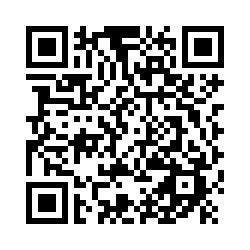
We are grateful for the opportunity to develop this column – and bring you on the journey by providing your feedback and input. Tell us what you want to learn about Mediation and AI by using the QR code below to take this very short survey.
Like you, we have so much to learn. Perhaps like you, Bill is a mediator who is taking his first steps to incorporate AI into his mediation practice and training. Sure, Amy is a renowned expert in AI and dispute resolution, yet she is learning about new technologies, technological advances, and platformers every day. Moreover, her background is in arbitration, so she has a lot to learn from Bill and all of you!
To learn more about why we are excited to write MedAItion, take a look at this short video: